Hot melt acrylic pressure-sensitive adhesive

Hot melt acrylic pressure sensitive adhesive has high solid content (100%), compared with the traditional solvent, emulsion type acrylic pressure sensitive adhesive, has no organic solvent, green, fast coating rate, low investment cost, beneficial environmental protection, and a high degree of automation advantages; But there are also coating temperature (160 ~ 180 ℃) high, heat aging, poor high-temperature resistance, coating-machine service life reduction, large energy consumption, not easy to control the thickness of the coating, the thin coating is difficult to shortcomings. With the acrylic copolymer, block copolymer, and macromonomer industry productization, crosslinking technology progress, hot melt acrylic pressure sensitive adhesive has been the corresponding development, technical process improvement, has overcome some shortcomings of traditional hot melt pressure sensitive adhesive, such as heat stability, seepage back, transparency, etc.

Hot-melt acrylate pressure-sensitive adhesive has excellent bonding properties, thermal stability, and weather resistance, but has low cohesion without crosslinking agents, resulting in the limited application. At present, the pressure-sensitive products of hot melt acrylate are relatively few, and there are not many related research reports. Most hot melt pressure sensitive adhesives in the market are mainly rubber hot melt pressure sensitive adhesives.
pressure-sensitive-adhesive

Radiation-curing acrylic pressure-sensitive adhesive

Radiation curing acrylic pressure-sensitive adhesive, including electron ray radiation (EB), and ultraviolet radiation (UV), is one of the solvent-free pressure-sensitive adhesives, radiation curing is the use of electron ray, ultraviolet light irradiation triggered unsaturated monomer polymerization, grafting, crosslinking, and other chemical reactions, the preparation of pressure sensitive adhesive products with practical properties. It has the characteristics of no environmental pollution, fast curing, environmental protection, energy saving, and high efficiency. Compared with the traditional emulsion type acrylic pressure sensitive adhesive, no drying treatment, excellent water resistance, high-speed coating, energy saving, aging resistance, and high-temperature resistance. Compared with solvent-based acrylic pressure-sensitive adhesive, there is no volatile solvent, and volatile composition (VOC) is almost zero; Compared with the hot melt acrylate pressure-sensitive adhesive, the heat resistance is better. At present, UV photocuring technology is widely used in radiation-curing acrylic pressure-sensitive adhesives. UV photocurable pressure-sensitive adhesive has obvious advantages over several types of environmentally friendly pressure-sensitive adhesive. It is the future research and development direction of the environmental protection pressure sensitive adhesive industry, and also the goal of pressure sensitive adhesive industry.
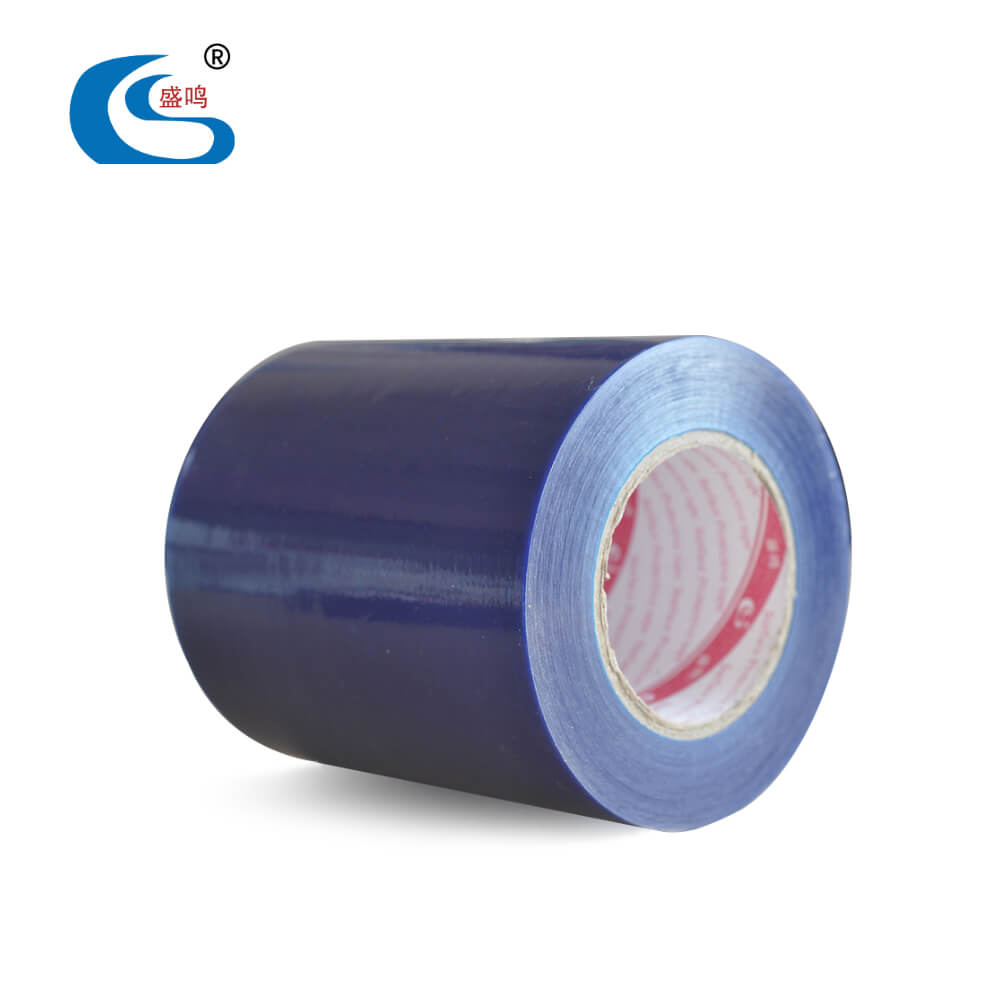
PE-protective-film-for-stainless-sheet

Functional acrylic pressure-sensitive adhesive

In recent years, some functional acrylic pressure-sensitive adhesive products for special purposes are also being developed and widely used. Functional acrylic pressure-sensitive adhesive mainly includes medical acrylic pressure-sensitive adhesive, electronic industry acrylic pressure-sensitive adhesive, flame retardant acrylic pressure-sensitive adhesive, and reputable acrylic pressure-sensitive adhesive.

The types of medical pressure-sensitive adhesives have made rapid development. New medical pressure-sensitive adhesives such as acrylate, silicone rubber, and polyurethane continue to emerge, among which acrylic pressure-sensitive adhesives are more studied and applied, gradually replacing the traditional rubber-type medical pressure-sensitive adhesives. The new acrylate medical pressure sensitive adhesive has good performance, is non-toxic, has no skin irritation, no allergic effect, good air permeability, and good compatibility with various drugs, because it can control drug release in a variety of ways, thus expanding the range of application of pressure sensitive adhesive.
The rapid development of electronic components to miniaturization and miniaturization, as well as the development and progress in the field of polymer chemistry, has led to the reform of bonding technology and promoted the further development and expansion of pressure-sensitive adhesives used in the electronic industry.

Environmental protection, flame retardant, and environmentally friendly pressure-sensitive adhesive are more and more favored by the market. Bi Shuguang [40] et al. compared various methods of preparing flame retardant acrylate pressure sensitive adhesive on the basis of analyzing the adhesion characteristics and structural characteristics of acrylate pressure sensitive adhesive. Adding flame retardant groups to develop bulk flame retardant acrylate pressure sensitive adhesive will attract more and more people’s attention, and the composite technology of flame retardant is also one of the important ways to achieve high flame retardant. The synergistic effect of organic flame retardants and inorganic flame retardants will open up broad prospects for the flame retardation of synthetic materials, and the new environment-friendly acrylic pressure-sensitive adhesive with flame retardation function will be more widely used.

Repulpable acrylic pressure-sensitive adhesive is mainly used in the paper industry, which will not pollute equipment in the process of waste paper recycling and meet the requirements of environmental protection and sustainable development.
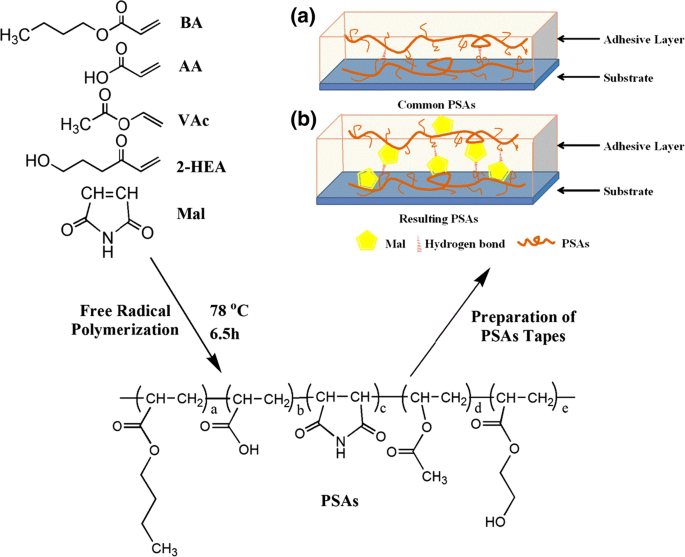
Traditional acrylate pressure-sensitive adhesives can be divided into three categories according to the curing method: non-crosslinked type, additional crosslinked dosage type, and self-crosslinked type. Non-crosslinked pressure sensitive adhesive coating has thermoplasticity after drying, so the cohesion is generally poor, and the adjustment of bonding property is difficult, in industrial production is not much application; Additional cross-linked acrylate pressure sensitive adhesive can be divided into peroxide cross-linked curing, isocyanate cross-linked curing, epoxy resin cross-linked curing, aziridine cross-linked curing, metal salt cross-linked curing, amine resin cross-linked curing pressure sensitive adhesive, etc., the use of external curing agent cross-linked acrylate pressure sensitive adhesive products more; Self-crosslinking acrylic pressure sensitive adhesive is prepared by introducing self-crosslinking monomers such as N-hydroxymethyl acrylamide and acrylic glycidyl ether copolymerization in the formula. Acrylate pressure-sensitive adhesive can be divided into solvent type, emulsion type, hot melt type, and radiation curing type.

acrylic pressure-sensitive adhesive

Solvent-based acrylic pressure-sensitive adhesive

The solvent-based acrylic pressure-sensitive adhesive has the advantages of low molecular weight, good wettability, high initial viscosity, fast drying, and good water resistance, etc., it is widely used in the fields of pressure-sensitive label, packaging tape, stationery tape, and double-sided tape. Solv-based acrylate pressure-sensitive adhesive is mainly prepared by polymerization of the soft monomer, hard monomer, functional monomer, and solvent. The solvents used are mainly ethyl acetate and toluene. The chain transfer constants of acrylate monomers in different solvents are different, and the solvent has significant effects on molecular weight and distribution, viscosity, reaction rate, chain termination rate, etc. The properties of pressure-sensitive adhesives can be adjusted by changing the ratio of monomer and solvent, the type of initiator, reaction temperature, and polymerization process.

Emulsion acrylate pressure-sensitive adhesive

Emulsion acrylate pressure sensitive adhesive has the advantages of a simple production process, safe and convenient use, friendly to the environment, low cost, no pollution, short production cycle, good adhesion to all kinds of materials, colorless and transparent coating, but also has the disadvantages of poor high temperature and humidity resistance, poor water resistance, slow drying after coating, so it needs to be modified to improve its related performance.

acrylic pressure sensitive adhesive
At present, emulsion acrylate pressure-sensitive adhesive is developing in the direction of functionalization and diversification. The research direction is mainly modified by adding viscosifying emulsion, applying various new emulsifiers, adding organosilicon modification, and using the “core-shell emulsion polymerization” which can design and control the particle size of emulsion pressure-sensitive adhesive. Through the application of various modification methods, At the same time, the emulsion acrylate pressure-sensitive adhesive system with special functions is introduced to obtain emulsion pressure-sensitive adhesive with different functions, so as to meet the requirements of different fields.

Classification of acrylic pressure sensitive tape

  • Packing tape acrylic + hot melt adhesive
  • Label tape acrylic + hot melt adhesive
  • PVC tape (telegraph insulation tape) rubber class
  • Protective tape acrylic + rubber
  • Double-sided tape acrylic + hot melt adhesive
  • Hot melt tape Hot melt adhesive
  • Paper tape acrylic + rubber
  • Medical tape acrylic + rubber
  • Special tape acrylic class + rubber class + silicone class
  • Anticorrosive tape rubber
  • Other adhesive tapes acrylic + hot melt adhesive + rubber class

Hot melt pressure sensitive adhesive

Hot melt pressure sensitive adhesive

Hot melt pressure sensitive adhesive is developed in recent years, it is mainly used in women’s sanitary napkins, the elderly and children’s diapers, double-sided tape, and trademarks, and its composition is mainly SIS and SBS elastomer and viscosifying resin. In recent years, with the development of the garment manufacturing industry, the demand for hot-melt adhesive powder used for clothing hot-melt interlining has increased year by year. In 1998, the demand of about 12,000 tons is not included in our statistics. The main role is polyethylene accounting for about 50%, polyamide for about 22%, and the rest is polyester and EVA hot-melt adhesive powder.

When the average molecular weight of acrylate copolymer was 406kDa, the initial adhesive force was 13, the continuous adhesive force was 0.3±0.06, and the 180° peeling force was 18.0±0.6N/25mm. When the average molecular weight of acrylate copolymer was 490kDa, the initial adhesive force of adhesive tape was 12, the continuous adhesive force was 0.5±0.05, and the 180° peeling force was 11.0±0.12N/25mm. When the average molecular weight of acrylate copolymer was 495kDa, the initial adhesive force of adhesive tape was 10, the sustained adhesive force was 0.9±0.08, and the 180° peeling force was 6.8±0.58N/25mm.

The results show that the copolymer station elasticity and the wetting characteristics of the bonded material affect the adhesive ability of the acrylic pressure sensitive tape. At the same time, the low molecular weight acrylic copolymer has better fluidity and bonding performance.

Application of acrylic pressure sensitive tape

Acrylic pressure-sensitive adhesive tapes are widely used, so we mainly discuss the application scenarios of functional acrylic pressure-sensitive adhesives emerging in recent years. Functional acrylate pressure-sensitive adhesives are mainly used in the electronics industry, medical industry, etc.

Medical pressure-sensitive tapes mainly use polyurethane, silicone rubber, and acrylic ester as the main raw materials. First of all, acrylic pressure-sensitive adhesive tapes are widely used in the medical field and have gradually replaced rubber-type medical pressure-sensitive adhesives. The acrylic medical pressure-sensitive adhesive has the characteristics of non-toxicity, no skin irritation, no allergic effect, and good air permeability. At the same time, it can control drug release from various channels and can be used in conjunction with external drug treatment.

Secondly, electronic components are developing toward miniaturization, and the rapid development in the field of polymer chemistry puts forward higher requirements for bonding technology, which promotes the development of the use of pressure-sensitive adhesives in the electronics industry. For example, the acrylate pressure-sensitive adhesive tape based on nickel powder has good electrical conductivity, which solves the problem that the connecting material is harmful to human health.

Some scholars synthesized acrylate pressure-sensitive adhesive tape by solution polymerization method and added an external linking agent to it to improve the cohesive properties of the adhesive tape. Subsequently, heat-expandable microsphere powder was added to it to develop a heat-peelable pressure-sensitive adhesive, which solved the problem of residual glue when the adhesive material was peeled off.

Acrylic pressure sensitive adhesive

The reaction medium of the acrylate pressure-sensitive tape is an organic solvent or water, and the glass transition temperature of the tape film is between minus 60 degrees Celsius and minus 30 degrees Celsius, which is adjusted by the branched chain of the acrylate copolymer.
Under normal conditions, the longer the side chain, the lower the glass transition temperature of the acrylate, and the more flexible the polymer chain, and the shorter the side chain, the higher the glass transition temperature of the acrylate, and the better the rigidity of the polymer chain.

Compared with other types of pressure-sensitive tapes, the single-component of acrylate pressure-sensitive tapes is very simple, which solves the problem of low molecular weight migration on the surface of the film. The adhesion mechanism of acrylate pressure sensitive tape is the same as that of pressure sensitive tape.

Adhesion can be explained by citing two theories:

  • The first one is mechanical interlocking. When the adhesive material is cured, it has a certain fluidity, so the pits or gaps on the surface of the adherend that cannot be seen by the naked eye will complement the pressure-sensitive tape. When the adhesive material is cured, the adhesive The bonded substances and adhesives achieve the bonding of different substances through mechanical interlocking. In this regard, the adhesive performance of acrylate pressure-sensitive tape is actually formed after the two substances are infiltrated and interlocked.
  • The second is the adsorption theory. The essence of bonding is the mutual contact between the bonded substance and the molecular level of the bonding material, which leads to the interaction between different atoms, so as to realize the connection between the two objects. Another way of saying this is the bonding material. One way of saying is that there will be van der Waals force between the bonding material and the substance to be bonded, and the electrostatic interaction will cause the two to connect.

There are four main categories of pressure sensitive adhesives used in industry:

  • solvent-based pressure sensitive adhesives
  • emulsion pressure sensitive adhesives
  • hot melt pressure sensitive adhesives
  • ray curing pressure sensitive adhesives

According to their polymer, pressure sensitive adhesives are divided into rubber pressure sensitive adhesives, polyacrylate pressure sensitive adhesives, polyethylene resin, polyurethane resin, and polyisobutene emulsion, and other emulsion types occupy an absolute advantage position. It is a key feature of pressure sensitive latex industry in our country. Pressure sensitive adhesives emulsion, especially pressure sensitive acrylic latex, plays special importance in our country.

Acrylate pressure sensitive adhesives

Acrylate pressure sensitive adhesive is currently second only to rubber, the most used pressure sensitive adhesive, it is a copolymer of acrylic monomer and another ethylene monomer, and can be roughly divided into crosslinked and non-crosslinked type two. Due to the low glass transition temperature (Tg: -20—700C) of the homopolymer, it is generally composed of flexible monomers that play the adhesive role, and hard monomers that can be endowed with adhesivity and cohesion at the high glass transition temperature, as well as a small number of monomers containing functional groups are copolymerized. The purpose of adding functional monomers is to further improve the viscosity, cohesion, and heat resistance creep of pressure-sensitive adhesives through cross-linking.

Do you know about pressure-sensitive adhesives? Pressure-sensitive adhesive is an adhesive kind featuring a special formulation. It binds together two surfaces upon applying pressure and does not need water, solvent, or heat activation. The advantage of pressure-sensitive adhesive is it is waterproof and odorless.

Pressure-sensitive adhesive combines viscosity with elasticity. Viscosity refers to the thick state, that is semi-fluid and sticky in consistency. It is the same as honey. Elasticity is stiff and solid, like rubber. It adheres well on a surface, consisting of adhesive substances in the raw materials.

The pressure-sensitive adhesives are not actual solids. It means with the increase in temperature, the bond, and the strength decrease. This adhesive type is permanently sticky and strong at room temperature.

What is the difference in pressure-sensitive adhesives?

The pressure-sensitive adhesive does not need much pressure, while other types require solvent, water, or heat to work as the adhesive. Engineers find pressure-sensitive adhesives useful due to the properties of load-bearing. It means the bond is strong to bear the required weight.

Pressure-sensitive adhesive tapes are known as PSA. They are self-stick adhesive, self-adhesive, featuring viscoelasticity. It is a polymer with this feature, viscoelasticity and which means the material is solid and liquid. The tape stays sticky on peeling and protects the adhesive. The demand for PSA is growing as this tape is simple to use, and is a cost-effective fastening solution.

The adhesive system repeatedly is useful for reuse. The strength of the adhesive stays the same with each cycle of adhesion, and reversing adhesion is a fast process, relatively.

Pressure-sensitive adhesive (PSA) tape characteristics

PSA tape features three qualities, such as:

  • Cohesion- It is the adhesive strength or the stickiness strength.
  • Adhesion– It is the adhesive strength, where the sticky material or the surface tape sticks to the substrate.
  • Tack– It is the adhesive time taking to any surface or substrate. Any the sticks with little pressure, while a less tacky tape requires harder pressure to stay in sticking.

A tape is a pressure-sensitive adhesive when it bonds with pressure. Any tape involving heat or a solvent is not a pressure-sensitive adhesive tape.

transparent PE protective film

Benefits of using Pressure-Sensitive tape

Pressure-sensitive tape is an efficient and quick tape. It is gaining popularity for various reasons:

  • The material of PSA tapes is light and thin, making working easy with them.
  • Fast to bond, so requires no other element to activate, but for pressure. It bonds dissimilar materials, so no worries about the compatibility of materials.
  • The PSA tapes reduce the noise of vibrations. The tapes absorb noise and do not rattle like any traditional fastener.
  • PSA reduces refinishing a surface need and eliminates visible mechanical fasteners. There is no fastener or screw, but there is a smooth finish.
  • PSA tapes fill gaps, creating uniform thickness and creating aesthetically pleasing products.

What Adhesive types are used for PSA tapes?

Rubber: The rubber-based adhesives are synthetic or natural rubbers. They are formulated with oils, resins, and anti-oxidants. It is a cost-effective PSA, offering quick sticking ability, but not an appropriate choice for high-heat applications.

The rubber-based PSA are easily removable and suitable as a permanent bonding option. They are designed to optimize PSA applications, and they are popular for their reliability, quality, and efficiency. They are ideal for manufacturing industries or organizations dealing with:

  • Packing list envelopes, Food labels, Specialty labels, Tire and Fabric labels, Permanent General purpose labels, and Resealable and Removable labels.

Acrylic: Acrylic-based adhesives are pressure-sensitive adhesives featuring acrylic polymers. They feature long-term aging and have resistance to environmental factors and solvents. These adhesives develop a stronger bond and manage higher temperatures.

The acrylic PSAs are versatile and offer better UV stability, provide lower operating temperatures, and improve clarity. The applications withstand temperature and moisture changes in the application. These adhesives provide advanced bonding as they are coater-ready. They are ideal for industries dealing with:

  • Pharmaceutical labels, Clear labels, Foam tape, Resaleable, and Removable labels, General purpose permanent labels, and Mounting tape.

The graphics industry also relies on the emulsion-acrylic PSAs for their clean removability, high clarity, and cohesion, making them ideal for various purposes including:

  • Corporate and architectural graphics
  • Exhibition graphics
  • Removable protective film
  • Advertising graphics

Precisely, the emulsion-acrylic PSAs are useful in medical product manufacturing. They are skin safe and suitable for:

  • Bandages, Wound dressings, and Medical tape

Another vital market using emulsion-acrylic PSAs is food contact. They are 100% safe as food-based applications. It is tested and tried to receive food range approval. These adhesives offer good adhesion and reliability, being consumer safe.

PE protective film for aluminum profiles with smooth surfaces

Silicone: The silicone polymer’s formulation and the adhesive bonds with silicon substrates. These adhesives of silicone are expensive and have a low initial tack. Yet, they withstand higher temperatures in comparison to acrylic and rubber adhesive.

Solvent acrylic PSAs assure the product’s resistance to weathering, moisture, UV, and a few chemicals, besides operating temperature. Manufacturers opt for solvent-based PSA for production, owing to its durability and strength that manages under challenging conditions. It is resistant to chemical and weather exposure, and UV, and is suitable as PSAs for a variety of applications:

  • Automotive tape
  • Exhibition graphics
  • Pharmaceutical labels
  • Over-laminating films
  • Durable labels
  • Ostomy care
  • Vehicle graphics
  • Conspicuity tape
  • Resealable and Removable labels
  • Surgical drapes
  • Would dressings

These PSAs withstand chemical contact and extreme temperatures that fulfill the need for supporting applications. Manufacturers require adhesive to various substrates to safeguard customers in extreme conditions. The pressure-sensitive adhesives are useful for pipe marking appliances to drum labels and work under extreme conditions perfectly as strong bonds.

UV-curable PSAs offer the freedom to get more options and grab the consumer’s attention. These PSAs optimize productivity for thicker tapes. PSAs are offering superior clarity and offer no-look labels featuring 100% coating benefits as solids technology. As per silicone material, the material lasts ranging from 6 to 12 months. It features a release liner or comes with a self-wound.

① Elastic type press-sensitive adhesive

The elastomer used for this kind of pressure sensitive adhesive was originally natural rubber, and then gradually expanded to a variety of synthetic rubber and thermoplastic elastomer. According to the elastomer used, this kind of pressure sensitive adhesive can be further divided into natural rubber pressure sensitive adhesive, synthetic rubber pressure sensitive adhesive, and thermoplastic elastomer pressure sensitive adhesive.

  • a. Natural rubber pressure sensitive Adhesive
  • b. Synthetic rubber and reclaimed rubber pressure sensitive adhesive
  • c. Thermoplastic elastomer pressure sensitive adhesive

② Resin-type press-sensitive adhesive

This kind of pressure sensitive adhesive used resin as polyacrylate, polyurethane, polyvinyl chloride, polyethylene ether, etc. Among them, polyacrylate is the most used at present, and its output has exceeded that of natural rubber pressure sensitive adhesive.

  • a. Acrylic pressure sensitive adhesive
  • b. Silicone and other resin type pressure sensitive adhesives

Polyvinyl ether is a kind of resin pressure sensitive adhesive developed earlier, but its importance has been gradually replaced by acrylate pressure sensitive adhesive.

In addition, ethylene. Vinyl acetate copolymer (EVA), polyurethane, polyester, PVC, and other resins can also be prepared into a variety of pressure sensitive adhesives.

Composition of thermoplastic elastomer pressure sensitive adhesive:

A thermoplastic elastomer is a new type of synthetic rubber developed after 1963. It has the stay solubility and hot workability of thermoplastic plastics. It has the elasticity of vulcanized rubber at room temperature without chemical crosslinking. Therefore, it is also called the third-generation rubber. A typical thermoplastic elastomer is an A-B-A block copolymer, which is made of styrene (St), diolefin (D), and styrene (St) terpolymer, referred to as SDS.

Specific varieties of SBS and SIS, its unique structure makes it can be in some organic solvents without plasticizing, at the same time at high temperatures, and have low melting viscosity. Pressure sensitive adhesives with different properties were prepared by adding components with different compatibility with polystyrene (PS), polybutadiene (PB), and polyisoprene (PI). Due to unsaturated bonds in PB and PI segments, it can also be modified by grafting copolymerization. Thermoplastic elastomer pressure sensitive adhesives are mainly solvents. Thermoplastic elastomer pressure sensitive adhesives are composed of SBS, SIS, viscosifying resin, softener, antioxidant, colorant, and so on. Only when the allocation of each group is appropriate, can the pressure sensitive adhesives with excellent performance be prepared.

Definition of pressure sensitive adhesive

There are more than ten interpretations of the meaning of pressure sensitive adhesive and pressure sensitive adhesive products, the most common definition is as follows:

Definition

  • 1: Using finger energy pressure can make the adhesive immediately adhere to any adhesion object’s smooth surface. At the same time, if the damage is the adhesive surface, the adhesive does not pollute the surface of the adhesive, this type of adhesive is called pressure sensitive adhesive. Its bonding process is very sensitive to pressure, so it is called pressure sensitive. Pressure sensitive adhesives are  generally not directly used to bond the adhesive. Pressure sensitive adhesives are made of various materials (tape and adhesive labels).
  • 2: (pressure sensitive adhesives) Academic definition: pressure sensitive adhesive is a viscoelastic body with viscous properties of liquid and elastic properties of solid; This kind of viscoelastic body has the influence factors and properties of both the contact process and the failure process of bonding.

First, the influence of material composition:

The properties of pressure-sensitive adhesives vary depending on their composition.

Rubber-type pressure-sensitive adhesive is mainly made of natural rubber as the main raw material. Due to the high relative molecular quality, low glass transition temperature, and good compatibility with adhesive resin, the pressure sensitive adhesive produced has good adhesion, low-temperature performance, fast viscosity, and adhesive force, and the main disadvantage is poor aging resistance.

Acrylic pressure sensitive adhesive is mainly made of acrylic monomer copolymerization, transparency, cohesion strength, and adhesion properties are good, especially for the polarity of the adhesive core and the porous surface has a good limit of adhesion and excellent aging resistance.

The main components of thermoplastic elastomer pressure sensitive adhesive are styrene elastomer SIS and SBS. The prepared solvent pressure sensitive adhesive has high content and low viscosity, high cohesion strength, and high peeling strength. Because the molecular structure contains double bonds, it is not resistant to aging, but the aging resistance will be greatly improved after oxidation.

Silicone pressure-sensitive adhesive is mainly composed of silicone rubber and silicone resin. It has good high and low-temperature resistance and good adhesion to polyolefin and fluoropolymer.

Second, the influence of relative molecular mass and its distribution

The relative molecular weight and its distribution have a great influence on various properties of pressure sensitive adhesives. When the relative molecular weight of pressure sensitive adhesive is reduced, the bulk viscosity can be reduced, which is conducive to wetting the surface of the adhesive, so as to improve the interface adhesion. However, when the relative molecular weight is too low, the cohesive strength is poor, and cohesive failure is easy to occur when the adhesive layer is stripped. Increasing the relative molecular weight can improve cohesion, but too much molecular weight will hinder dispersion and wetting.

Therefore, the relative molecular weight of pressure sensitive adhesive must be within a certain range to obtain good adhesion properties. The relative molecular mass distribution also has a greater impact, generally wider relative molecular mass distribution of pressure sensitive adhesive has better bonding properties.

Third,Influence of glass transition temperature

The glass transition temperature, Tg, has a great influence on the performance of pressure-sensitive adhesives. For pressure-sensitive adhesives with different Tg, the bulk viscosity and elastic modulus coexist peacefully at room temperature and the peel strength decreases, resulting in the loss of pressure-sensitive properties. If Tg is too low and the cohesion strength is low, peel damage will occur.