The main role of traditional emulsifiers is to provide emulsifying sites and take up. To solubilizing effect. Because this kind of emulsifier does not participate in the polymerization reaction of emulsion, it only exists on the polymer surface in the way of adsorption and remains in PSA. Therefore, during film forming, this kind of emulsifier is easy to migrate and aggregate and easy to form a channel for water invasion, which significantly reduces the water resistance of the film. The molecular structure of reactive emulsifiers contains reactive functional groups (such as double bonds, carboxyl groups, hydroxyl groups, and sulfonic acid groups), which can directly participate in copolymerization. Therefore, this kind of emulsifier can be polymerized to the latex particles in the form of chemical bonds, which effectively avoids the migration of emulsifiers and improves the water resistance and other properties of PSA.


In recent years, with the rapid development of the preparation of inorganic nanoparticles and surface modification technology, introducing inorganic nanoparticles into acrylate emulsion is one of the effective ways to modify acrylate PSA. Nanoparticle modification can significantly improve the cohesion of emulsion. In addition, due to the size effect and interface effect of nanoparticles, it will be introduced into the acrylate PSA system, can effectively improve the rheological properties of emulsion, reduce the strength of capillary action, and reduce the thickness of the adhesive layer and the amount of glue without reducing PSA adhesion, so as to effectively improve the PSA coating rate, reduce the production cost of PSA called. The commonly used modified nanomaterials mainly include nano-sio2, nano-TO2, nano-caco3, nano-zno, and nano-Fe2O3.
glue

Features of nano particle modification of water-based acrylic PSA


After nano particle modification of water-based acrylate PSA, its heat resistance, adhesion, adhesion, and coating properties have been improved or increased, because of the small particle size of the nanoparticles. The specific surface area is large, so agglomeration is easy to occur (making the particle size larger). Therefore, the use rate of nanoparticles and the stability of the emulsion can be improved effectively by adding an appropriate crosslinking agent or dispersant when nanoparticles are modified.

This paper provides the introduction of a water-based acrylic structural adhesive, which is composed of a mixture of pretreatment liquid and seed liquid. The pretreatment liquid is emulsified by methyl acrylate monomer and modified monomer in a mixture of ice water and then emulsified again by adding methyl methacrylate, acrylic wax, vinyl acetate, vinylidene chloride, and crosslinked monomer.

It can be gradually heated to 25°C before use to ensure rapid bonding after the reaction. The seed liquid was prepared by emulsifying the mixture of a methyl acrylate monomer and surface active monomer. The reaction temperature of the seed liquid should be controlled at 65°C and the reaction time should be at least 30min. The temperature should be gradually controlled to about 25°C before use. Among them, methyl acrylate is an alkyl carbon number of 3, and the modified monomer is a linear organic polysiloxane, which contains an alkenyl group bonded with silicon, and the mass percentage of the alkenyl group is 0.7%.

adhesive manufacturer

The alkyl carbon number of methyl methacrylate is 4. The crosslinked monomer was composed of glycidyl methacrylate, diacetone acrylamide, and diacyl adipate membrane. The mass ratio of the diacyl adipate membrane in the crosslinked monomer was 23%. The surfactant monomer is composed of alkyl allyl polyoxyethylene phosphate and dialkyl -2- sulfosuccinate sodium. The mass percentage of alkyl allyl polyoxyethylene phosphate in the surfactant monomer is 48%. The mass ratio of methyl acrylate, methyl methacrylate, acrylic wax, and organic polysiloxane was 1:5:6:1; The weight ratio of vinyl acetate, methyl methacrylate, propylene wax, and vinylidene chloride was 11:5:6:1, the mass ratio of organosiloxane to methyl acrylate monomer in the pretreatment solution was 1:0.7, and the mass ratio of glycidyl methacrylate, diacetone acrylamide, and diacyl fibril adipate in the crosslinked monomer was 2:7: 1, the mass ratio of crosslinked monomer to methyl methacrylate was 0.3:5, and the mass ratio of surface active monomer to methyl methacrylate was 0.13:0.3.

The total amount of methyl acrylate above is 1kg, the total weight of the water and ice water mixture is 19kg, and the rest is made by referring to the mass ratio. Adjust the water content properly, so that the specific gravity of the glue is about 1.03, For the final prepared water-based acrylic structural adhesive, according to the GB18583-2008 standard, the viscosity can be guaranteed at 150mPa. s under 25°C; Sponge bonding comparison test: material completely destroyed; The bond strength can reach 1.18KN/M at 0.2H, and exceeds 1.84KN/M at 0.5H. The shear strength exceeds 2.4MPa.

Introduction of water-based acrylic structure pressure-sensitive adhesive

This paper provides the introduction of a water-based acrylic structural adhesive, which is composed of a mixture of pretreatment liquid and seed liquid. The pretreatment liquid is emulsified by methyl acrylate monomer and modified monomer in a mixture of ice water and then emulsified again by adding methyl methacrylate, acrylic wax, vinyl acetate, vinylidene chloride, and crosslinked monomer. It can be gradually heated to 25°C before use to ensure rapid bonding after the reaction. The seed liquid was prepared by emulsifying the mixture of a methyl acrylate monomer and surface active monomer. The reaction temperature of the seed liquid should be controlled at 60°C and the reaction time should be ensured to be 25min.

Before use, the temperature should be gradually controlled to about 25°C. The alkyl carbon number of methyl acrylate was 3, and the modified monomer was linear organic polysiloxane. The organic polysiloxane contained alkenyl groups bonded with silicon, and the mass percentage of alkenyl groups in organic polysiloxane was 0.5%. Methyl methacrylate with an alkyl carbon number of 3; The crosslinked monomer was composed of glycidyl methacrylate, diacetone acrylamide, and diacyl fibril adipate.

factory

The mass ratio of diacyl fibril adipate in the crosslinked monomer was 30%. The surface active monomers are composed of alkyl allyl polyoxyethylene phosphate and dialkyl -2- sulfosuccinate sodium. The mass percentage of alkyl allyl polyoxyethylene phosphate in the surface active monomers is 40%. The mass ratio of methyl acrylate, methyl methacrylate, acrylic wax, and organosiloxane is 1:3:6:1. The weight ratio of vinyl acetate, methyl methacrylate, acrylic wax, and vinylidene chloride was 11:3:6:1, and the mass ratio of organic polysiloxane to methyl acrylate monomer in the pretreatment solution was 1:0.7. The mass ratio of glycidyl methyl acrylate, diacetone acrylamide, and diacyl fibril adipate in the crosslinked monomer is 2:7:1, and the mass ratio of the crosslinked monomer to methyl methacrylate is 0.3:3; The mass ratio of surfactant monomer to methyl acrylate was 0.13:0.3.

Use of water-based acrylic structure PSAs

The total amount of methyl acrylate taken above is 1kg, the total weight of the water and ice water mixture is 16kg, and the rest is made by referring to the mass ratio. Appropriate adjustment of water content, so that the glue specific gravity in 1.06, the final produced water-based acrylic structural adhesive, referring to the GB18583-2008 standard, 25°C viscosity can be guaranteed at 75mPa. s; Sponge bonding comparison test: the material is completely broken; 0.2H bond strength can reach 1.12KN/M, after 0.5H bond strength can exceed 1.85KN/M, shear strength is 2.34MPa.

Introduction of water-based acrylic structural pressure-sensitive adhesive


This paper provides the introduction of a water-based acrylic structural adhesive, which is composed of a mixture of pretreatment liquid and seed liquid. The pretreatment liquid is emulsified by methyl acrylate monomer and modified monomer in a mixture of ice water and then emulsified again by adding methyl methacrylate, acrylic wax, vinyl acetate, vinylidene chloride, and crosslinked monomer. Keep for spare, before use can be gradually heated up to 25C to ensure rapid bonding after reaction; The seed liquid was prepared by emulsifying the mixture of a methyl acrylate monomer and surfactant monomer.

The reaction temperature and reaction time of the seed liquid should be controlled at 63°C and 28min, and the temperature should be gradually controlled to about 25°C before use. The modified monomer was linear organic polysiloxane. The organic polysiloxane contained alkenyl groups bonded with silicon, and the mass percentage of alkenyl groups was 0.6%. The alkyl carbon number of methyl methacrylate is 3 and 4 of alkyl methacrylate; The crosslinked monomer was composed of glycidyl methacrylate, diacetone acrylamide, and diacylperone adipate, in which the mass of diacyl fibril adipate in the crosslinked monomer was 27%.

water-based acrylic structure pressure sensitive adhesive

The surface active monomers consist of alkyl allyl polyoxyethylene phosphate (sodium) and dialkyl-2-sulfosuccinate (sodium) with a mass ratio of 1:4:6:1 for methyl acrylate, methyl methacrylate, acrylic wax, and organic polysiloxane. The weight ratio of vinyl acetate, methyl methacrylate, propylene wax, and vinylidene chloride, was 11:4:6:1. The mass ratio of organic polysiloxane to methyl acrylate monomer in the pretreatment solution was 1:0.7. The mass ratio of hydro glyceryl methacrylate, diacetone acrylamide, and diacyl fibril adipate in the crosslinked monomer is 2:7:1, and the mass ratio of the crosslinked monomer to methyl methacrylate is 0.3:4. The mass percentage of alkyl allyl polyoxyethylene sodium phosphate in surfactant monomer was 54%, and the mass ratio of surfactant monomer to methyl acrylate was 0.13:0.3.

The use of water-based acrylic adhesive

The total amount of methyl acrylate taken above is 1kg, the total weight of the water and ice water mixture is 17kg, and the rest is made by referring to the mass ratio. Among them, 0.7kg methyl acrylate was taken for the preparation of the pretreatment solution, 0.3kgo was taken for the preparation of the seed solution, and 0.3kgo was taken when the pretreatment solution and seed solution were mixed and quickly stirred evenly, and the mixed solution was used within 0.1H.

Adjust the water content properly, so that the specific gravity of the glue is 1.04, the final prepared water-based acrylic structural adhesive, according to the GB18583-2008 standard, 25 °C viscosity can be guaranteed at 150mPa. s; Sponge bonding comparison test: material completely destroyed; 0.2H bond strength can reach 1.13KN/M, after 0.5H bond strength can exceed 1.75KN/M, shear strength 2.3MPa.

Adhesives are more common in our life, and can not be ignored in life. What kinds of adhesives are there? Let’s take a look.

Polyacrylic resin:

Mainly used in the production of pressure-sensitive adhesives, but also used in textile and construction fields. In recent years, domestic enterprises from abroad introduced several pressure-sensitive adhesive product production lines, promoting the development of domestic polyacrylic resin production technology.

Polyurethane adhesive:

It can bond a variety of materials and maintain the physical and chemical properties of materials at low or ultra-low temperatures after bonding. It is mainly used in shoemaking, packaging, automobiles, magnetic recording materials, and other fields. In recent years, the annual output of polyurethane adhesives in China has increased by 30% on average. About 170 factories in China now produce more than 100 different specifications of such adhesives.

Hot melt adhesive:

Different raw materials can be divided into EVA hot melt adhesive, polyamide hot melt adhesive, polyester hot melt adhesive, polyolefin hot melt adhesive, and so on. At present, the main domestic production and use of EVA hot melt adhesive. The main raw materials of polyolefin series adhesive are ethylene series, SBS, and SIS copolymer.
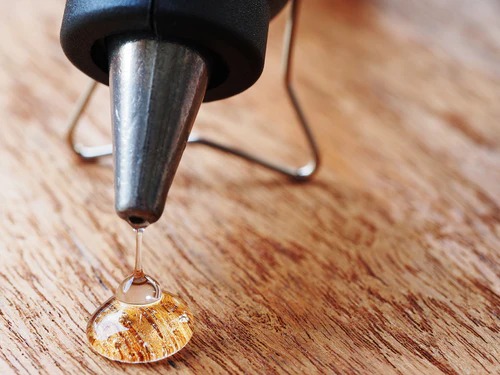
adhesive


Epoxy resin adhesive:

Can be used for bonding between metal and most non-metallic materials, and is widely used in construction, automobile, electronics, electrical appliances, and daily household goods. There are more than 100 factories producing epoxy resin adhesives in China, with scattered distribution and an annual output of about 10,000 tons.

Silicone adhesive:

Is a kind of sealing adhesive, with cold resistance, heat resistance, aging resistance, waterproof, moisture-proof, high tensile fatigue strength, small permanent deformation, non-toxic, and so on. In recent years, this kind of adhesive has developed rapidly in China, but at present, the raw material of organic silicon adhesive relies on imports.

Synthetic adhesive:

Mainly used in wood processing, construction, decoration, automobile, shoemaking, packaging, textile, electronics, printing, binding, and other fields. At present, China imports nearly 200,000 tons of synthetic adhesives every year, including hot melt adhesives, silicone sealing adhesives, polyacrylic adhesives, polyurethane adhesives, automotive PVC plastic adhesives, and so on. At the same time, the annual export of synthetic adhesives is about 20,000 tons, mainly polyvinyl acetate, polyvinyl acid formaldehyde, and pressure-sensitive adhesives.
Adhesives for wood processing:
Medium-density fiberboard, gypsum board, plywood, particle board, etc.


Adhesive for construction:

Mainly used for construction decoration, sealing, or bonding between structures. With the development of the construction industry, the development of high-rise buildings, and interior decoration needs, the amount of adhesive used in construction increases sharply. The consumption of building adhesive is about 600 thousand tons above. However, experts think that the product structure of this kind of adhesive needs to be adjusted. At home, building decoration adhesives such as polyvinyl acetate, polyacrylic acid, VAE emulsion, and so on basically can meet the needs, but building sealants and structural adhesives still need to be partly imported from abroad.
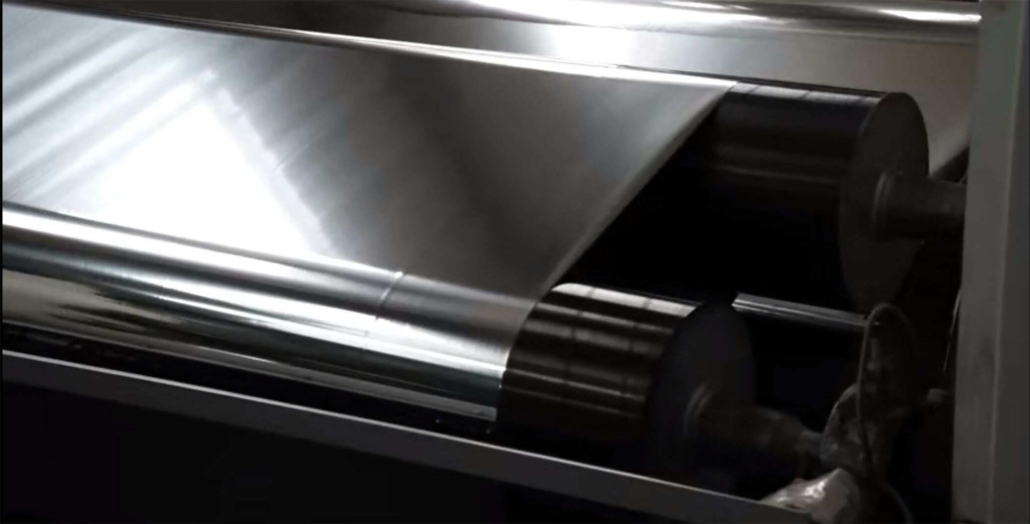
protective films

Sealing adhesive:

Mainly used for doors, Windows, and prefabricated parts of the house connection. In the past, tung oil mixed with lime was used as a sealant, but now synthetic adhesives must be used for buildings with more than two stories. High-grade sealing adhesive for silicone and polyurethane adhesive, intermediate for neoprene rubber adhesives, polyacrylic acid, and so on. In our country, the construction adhesive market, silicone adhesive, and polyurethane sealing adhesive should be the future development direction, currently, they occupy the sales volume of building sealing adhesive is about 30%.

Adhesive for building structure:

It is mainly used for joining structural units. For example, in the external repair of reinforced concrete structures, metal reinforcement fixing and the construction site construction and epoxy resin series adhesives are generally considered.

Adhesives for cars:

It is divided into 4 kinds, namely, adhesive for the car body, interior decoration, windshield, and chassis of the car body. At present, the annual consumption of automobile adhesives is about 40 thousand tons, among which the biggest use is PVC plastic adhesive, neoprene rubber adhesive, and asphalt series adhesive.

Adhesive for making shoes:

Annual consumption is about 125,000 tons, including 110,000 tons of neoprene adhesive and 15,000 tons of polyurethane adhesive. Because chloroprene rubber adhesives need benzene as a solvent, and benzene is harmful to the human body, development should be limited, so in order to meet the development needs of the footwear industry, polyurethane series adhesives will be the direction.

Adhesive for packaging:

Mainly used to make a pressure-sensitive tape and pressure-sensitive labels, paper, plastic, metal, and other packaging materials surface bonding. The adhesive used for paper packaging material is polyvinyl acetate emulsion. The adhesives used for plastic and metal packaging materials are polyacrylic acid emulsion, VAE emulsion, polyurethane adhesive, and cyanoacrylate adhesive.

Electronic adhesive:

Less consumption, at present less than 10,000 tons per year, most used for integrated circuits and electronic products, is mainly used epoxy resin, unsaturated polyester resin, and silicone adhesive.
 

The weakness of ordinary water-based acrylate PSA is poor bonding strength and heat resistance, and it is difficult to firmly bond on low surface energy materials. The molecular structure of organosilicon contains Si-O-Si bond and side chain organic groups, and its molecular chain is highly curly, the intermolecular association is small and the intermolecular attraction is weak, so its surface tension is low and it has good hydrophobicity. Si-0-Si bond Angle can be changed in the range of 130°~160°, so organosilicon has high softness. Acrylate PSA(silicone propyl -PSA) modified by organosilicon has many advantages, such as low surface energy and bonding properties.

Water-based Si -PSA has good cohesion. With adhesive properties, heat resistance, and water resistance, its application prospects are very broad.

Company Timeline

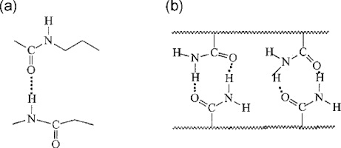
The adhesion of PSA is mainly due to the van der Waals force and hydrogen bond formed between PSA and the surface of the bonded substrate. The surface of the bonded substrate has a complete structure and partial electron rearrangement. Aqueous acrylate emulsion has good surface wettability, so the adhesion and initial adhesion of corresponding PSA is relatively good. Generally, the initial adhesion of PSA is improved by reducing the polymer T[(glass transition temperature), but the cohesion strength of PSA will be weakened; excessive Tg reduction will lead to the lack of rigid components of PSA, resulting in the decline of adhesion and creep resistance, so the comprehensive performance of PSA will be reduced. By using crosslinking modified PSA, the system can form a cross-networking structure, which can effectively enhance PSA’s peeling strength, adhesive strength, and creep resistance, which can effectively solve the balance problem between PSA’s peeling strength, adhesive strength, and initial adhesive strength, and also improve PSA’s tensile strength, adhesive strength, heat resistance, and water resistance at high temperature.

Crosslinking modified water-based acrylic pressure sensitive adhesive

Generally, the crosslinking modification method is to introduce monomers containing alkenes or reactive functional groups in the copolymer, so that the copolymer macromolecular chain can be connected with the crosslinking groups; Then the copolymer reacted with the hydroxyl group, carboxyl group, and epoxy group to achieve the purpose of crosslinking modification.

acrylic PSA

Carboxyl or hydroxyl crosslinking modified PSA not only increased the crosslinking density and spatial network structure of the polymer but also affected the entangling degree between the polar molecular chains on the surface of the PSA polymer, which had an impact on PSA. The peeling strength, initial adhesion, and holding adhesion of the two components play a key role. The creep resistance, bonding, and tensile properties of PSA were effectively improved by the crosslinking reaction. Suitable crosslinking agents are available in varying degrees. Improve PSA’s heat resistance, water resistance, and film-forming properties.

Acrylate PSA mainly includes a solvent, water-based acrylate PSA two categories: solvent acrylate PSA VOC(volatile organic matter) content is larger, and its in the environment, resources, and safety. There are many drawbacks, so the scope of its use is limited. The water-based acrylate PSA uses water as a solvent, which has the characteristics of environmental friendliness, safety, low cost, and high production efficiency, so its application prospect is very broad. However, water-based acrylate PSA has some shortcomings such as slow coating, slow drying rate, high energy consumption, and low equipment utilization rate in the drying process, so there are many reports on its modification.

Protective Film Manufacturer Banner-3

Green environmental protection is the theme of current industrial production, and countries all over the world pay more and more attention to the sustainable development of the environment and energy. Although the shortcomings of organic solvents, such as toxicity, inflammability, and pollution, lead to the development and application of solvent-based acrylate pressure-sensitive adhesives being limited, their superior performance still has a large market over a considerable period of time. Reducing solvent content and using environmentally friendly solvents are important development directions. Solvent-free acrylate pressure sensitive adhesive meets the requirements of environmental protection, but its application performance needs to be improved, continue to improve the performance of hot-melt acrylate pressure sensitive adhesive products, reduce the production cost of photocuring acrylate pressure sensitive adhesive, development of new curing technology and curing equipment, will become the development direction of solvent-free acrylate pressure sensitive adhesive. The demand for acrylic pressure-sensitive adhesive and its products in packaging and related industries is increasing. The research and development of environment-friendly acrylic pressure-sensitive adhesives are getting more and more attention. In the future, research and development will be more environmental protection, energy saving, convenient and high performance.

raw material